AN HEIR OF SLAVERY AND A DESCENDANT OF THE ENSLAVED WALK INTO A BAR…
I’d never heard of the ‘Heirs of Slavery’ until a work project made our two worlds collide. Formed in 2023, they’re a group of people whose Ancestors profited greatly from the Transatlantic Slave Trade. They want to acknowledge the role they played and how it benefits them to this very day. Made up of approx. 200 families who have signed up to the newsletter, they also have around 300 more on a mailing list who may or may not be interesting in joining fully. The Transatlantic Slave Trade has been a hot topic of conversation recently as Lenny Henry and Marcus Ryder have co-written a book on the subject. The Big Payback makes the case for reparations being paid to the descendants of the enslaved. It’s been met by anger and resistance from the usual suspects. But it has also inspired supportive articles, radio discussions and even a book launch in Parliament.
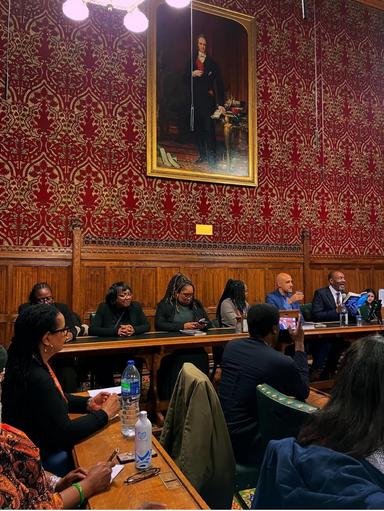
Photo by John Dower from Heirs of Slavery on Instagram
This subject invokes huge emotions in me I can’t even explain. Perhaps it’s genetic memory but when I see pictures and hear stories depicting the brutality my Ancestors endured, I feel searing pain, anger and frustration. I also knew I’d have to pitch the hell out of this one.
“Zakaya Media is supposed to tell Black & POC stories. They have so many places to tell their stories. Let them choose one of them. This isn’t a great start!”
I know this. But the Transatlantic Slave Trade ties us to white people, and it does so in the most uncomfortable way possible. Many of us have white ancestors because of it and we all know the unpleasant reason why. When I heard about ‘The Heirs of Slavery’ I must confess I hated the entire concept. For those thinking ‘hate is a strong word’ – I know. That’s why I used it. It felt pious, public and…painful. Were they just a group of white people with some sort of saviour complex? Why did we need to hear from people who’d profited, even indirectly, from such evil and misery? And how would the conversation even start?
“So, your Ancestors were slaveowners and you’re sad about it? Are we meant to hug it out? Do we share recipes? You have just got to try my banana bread loaf! The recipe was passed down from my Great, Great Grandmother. It’s a funny story actually. She perfected it pretty quickly after your Great, Great Grandmother whipped her back raw every time she made a mistake.”
I arranged an interview with Alex Renton of the group. After researching him, I found his CV to be a smorgasbord of causes and issues that he simply refuses to stay quiet about. This makes me lose some of my cynicism and I was determined to go into the exchange with an open mind.
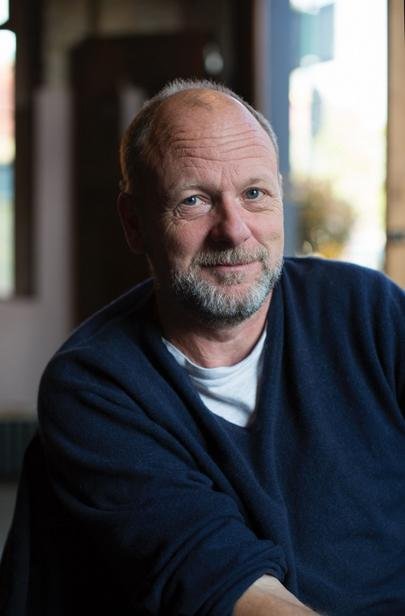
Photo of Alex Renton courtesy of Caroline Irby
AR: I’m obviously from a very privileged background. Privately educated. Father was a Tory MP. But very early, I had a ‘rebel’ attitude which growing up in the 70’s and 80’s could play out in quite easy ways. My mates from school and I all signed up to ‘Rock Against Racism’ and the Anti-Apartheid movement. It was a way of us telling our parents ‘We reject your values’, and I’ve never really left that. Then later, specific issues that have affected my life, like cruelty to children, the history of enslavement became things that through my connections as a journalist, I could make into my work.”
ZM: What do your family think about you poking around in the past like this?
AR: (looking slightly downcast) Well, that’s been really very difficult and I think I was very naïve. My story in transatlantic enslavement really starts, as I said in my book with me poking about in my maternal Grandparents basement in Scotland. I’d always known there were a huge number of ‘family papers’ as we referred to them, stacked up in a dusty, damp room. My Grandfather had tried to catalogue them. They went back 3/400 years and reading them I kept seeing the words ‘Jamaica’ and ‘Tobago.’ I asked my Mum about them, and she responded (and I quote literally because the words are seared on my brain), “Oh yes, we were a bit involved in slavery. My Dad did tell me. But don’t worry, we didn’t make much money and everyone else was doing it.”
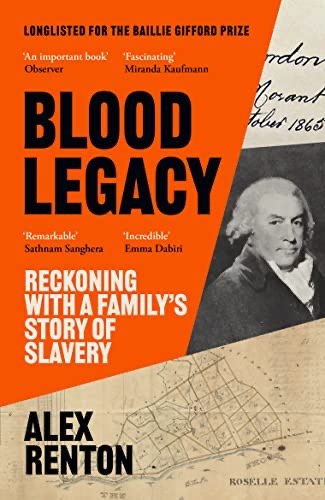
AR: (continuing) And even just as a journalist you go ‘Oh my gosh!’ I mean, I was 55 and like the rest of my generation, I’d no idea. We knew our family had been rich and powerful in the 19th & 20th Centuries but didn’t know where the money had come from. Then it suddenly became incredibly obvious. I knew I had to find out more, so I started reading those papers and got very seriously into it. From a storyteller’s point of view, it was quite dramatic, these were letters between my direct Ancestors. One writing to his brother in Scotland from Tobago, talking about buying African people and clearing land to start a cotton plantation. Complaining about the cost, how lonely and difficult it was, basically looking for sympathy. I realised this was a story not only I hadn’t been told, but many people like me hadn’t been told. We’d been fed propaganda to see the British Empire as a good thing, and to see the British as heroes in the transatlantic enslavement story. So, I began working on the book then travelled to Jamaica and Tobago to interview people. I asked people from early on what they thought I should do with that material as it was their story as much as mine. And a friend that identifies as Black said,
“I don’t want to hear anymore slavery porn, I don’t want to hear any more of this horror. But I do want to hear how you white people are going to heal yourselves?”
And I do think that’s really important. I met lots of people on the sites of the plantations where we murdered their Ancestors and asked them what we should do. People were very generous and willing to join that conversation. That was huge and shaming. Why hadn’t we had this conversation decades ago? I gave my family the book to read in drafts. Some of them were very unhappy indeed – on two levels. The first being I’d produced the first draft in June 2020 when the Colston statue had just been torn down. Some were saying, “You’re literally putting our lives at risk. What if these Black Lives Matter people come and smash the windows?” So that was one thing which was obviously absurd, but you could understand it.
I don’t say this out loud but don’t think his family were all the way wrong if I’m honest. I remember 2020 well. The Year of the Black Square. The year that bored people locked inside their homes by their governments pretended to care about racism for a few months. It was the best of times. It was the worst of times. People totally would have smashed their windows, but it would’ve been white people. Just like The Colston Four.
Also, I know some people will ask why I didn’t take the opportunity to ask him a ‘person who identifies as Black is?’ Is it a Rachel Dolezal type? Is it a mixed race person that only acknowledges their Black side? Or was it just a regular Black person like me? I was confused but we recently heard the first ever Black leader of The Conservative Party announce that she no longer identified as Nigerian. Unprovoked. Anyway, he was on a roll, so I let it go.
AR: But much deeper than that, some of the older generation said I was betraying our family honour. They said we didn’t do anything wrong; it was legal. It’s not important now, and we have nothing to feel ashamed of. And I hadn’t really clocked that was going to happen. I thought they’d all go,
“Ooh, you’re so brilliant. Well done! And now we must face up to this.”
(laughing) And that was me being…being…(stops laughing suddenly) well I was stupid. But I think now a few years on, most of the family are with it. Obviously, the younger generations are. But there are some I will never talk to again and that’s sad, because I loved them.”
ZM: That’s really sad
AR: Yeah, but I’m not the victim here. I’m not the person who suffered through the legacy of slavery.
ZM: No, you’re not the perpetrator either. I understand how painful family breakdown can be even if the reasons for it are justified. At school they teach us there was slavery, but they never dive into the horror and brutality of it all. So, when confronted with the details, the reaction of some of your family is a natural one. Exposing any type of abuse, and slavery was abuse on steroids, can result in walls being put up. People would rather believe you’re a liar, exaggerating or even crazy because that’s easier to deal with. They also probably panicked they’d get sued. I did read how Benedict Cumberatch’s Mum had begged him to change his name before he went into acting, in case people from Barbados where my family is from, came after him for reparations. I remember The Mail writing how people in Barbados government were ‘targeting’ Cumberbatch because his Ancestors were huge slavery benefactors on the island. I’ve a lot of family called Cumberbatch, and we know how they came to be called that.
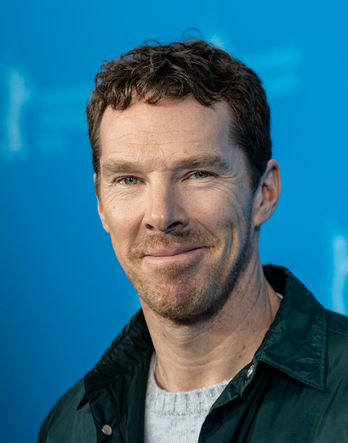
Benedict Cumberbatch. Photo taken by Harold Krichel
ZM: (cont) Do you think some of your family did know what had happened, but didn’t want to talk about it?
AR: The generation above me did. My maternal Grandfather’s father did because he’d catalogued the notes! He was a historian and had been planning a trip to Jamaica the year he died, but none of the family had been to the sites of enslavement since the 18th century. I have a letter he’d sent my Mum’s elder brother who is very against the book. On one hand he was saying it was awful. But then he also said,
“You must remember that Sir Adam (the name of our Ancestor who did most of the buying of plantations and African people) was a highly civilised man in the last civilised age the world has known.”
And this is part if the reason to get into this, to get into those issues around morality. Because clearly, loads of British people, both then and in the decades afterwards slavery ended, found a justification for it. Those Ancestors were Christians, claiming they believed in the rights of man. Yet they’d not enslave a white person because that was morally wrong. By 1770 you couldn’t have done it legally anyway, not in Scotland at least. But with the help of philosophers, they could persuade themselves people with Black skin were not human. That enabled them to treat them like farm animals. There are details in the letters I read very quickly about the use of brands which indicates that. And as the price of enslaved people went up as the abolition happened in 1807, there are letters saying: For goodness’ sake buy more young women because we need to breed! And those details are an absolute genocidal horror. But there are people in Britain who even armed with that knowledge will say, that was then, and this is now, and the morality was different. But the morality wasn’t different. There were wealthy landowners in Scotland that were pro abolition on moral grounds. It was an absolute wrong -then and now- and there’s no getting away from that. The other thing some find hard to accept, is they invented anti-African or Anti-Black racism to justify their greed and moneymaking. Because they couldn’t make the moral case for it unless they decided that Africans were less than human. And that racism still pertains today damaging lives. And to get people to accept that issue, that racism today and all the social ills alongside it, comes directly comes from that, is a huge leap. But it shouldn’t be unless you want to deny it. They know.
ZM: They do. If you look at the issue of Black women dying in childbirth and you know the story of Marion J Sims, dubbed ‘The Godfather of Modern Gynaecology’ you can absolutely see the connection. He was only able to make such great strides in his field because he operated on enslaved women without anaesthesia and the justification given was Black women didn’t feel pain like white women. Now, both here and in the US, there is an elevated number of Black women that die in childbirth, in the UK it’s at 5x the rate of white women. It’s not just when it comes to maternity care, it’s across the board when it comes to healthcare treatment.
AR: (wincing) That’s horrific. It’s interesting isn’t it because many could see that’s horrific, absolutely wrong and based on a racist trope that’s actually insane. But some refuse to go that bit further and see why there may be more Black people incarcerated and how that should be linked to the same racism, when it’s clearly logical. But that’s a denial because people who call themselves ‘not racist’ are still prepared to sign up to racist tropes and support systemic racism because it’s easier for them.
ZM: Have you ever encountered a Black person coming from a similar point of view as some of your relatives? There have been Black people on both sides of the Atlantic who argue that Black people shouldn’t be compensated for slavery. Inaya Folarin Iman said on Radio 4’s Antisocial it was ‘morally wrong’ to seek compensation.
AR: I’ve experienced it in a slightly more nuanced way. I’ve had Black friends tell me they have to put their head down and ‘be good’ because the way you get on in a white society is by being as un-Black as you can. To me that’s an awful thing to hear because my class have been a part of making that happen. Some told me not rake this up and increase racial divides, because it’s bad enough as it is. I asked a lot of people in Jamaica, Tobago and in the UK what they would ask for of someone like me who had just discovered this history? Particularly in the Caribbean, people often replied, “Well, an apology would be nice!”
This is interesting and important, because lots of white people ask what’s the point of apologising for something that wasn’t your fault which happened years ago? But an apology, then an acknowledgement is really important – as any relationship counsellor will tell you! There is clearly an injustice around the fact that the nations or the people that made this country so wealthy, are so much less wealthy than us. Than rich white Britain is anyway. I’ve done talks in schools, and I think the most significant thing I’ve heard a lot is, “Do be careful not to paint us all as victims. Don’t let my children dwell on this appalling transgenerational horror. I want them to be able to grow up with open minds and aware that they can be whatever they want.” There’s a lot of talk about trans generational trauma and so on, and I believe in the psychology and physiology of that. I’ve been in touch with people like The Black Curriculum who are all about positive role models and so I’m really aware not to overstate that part of the story.
ZM: How do you think that reparations should be implemented? Because that’s another of the things that causes big arguments.
AR: The first thing I say, and we have this group called ‘Heirs of Slavery’ and some people are offended by the very name of it, and I can understand that. What we’ve said from the very beginning, and our chief thing is to encourage others like us to acknowledge (cause as I’ve said we’ve heard from many of the descendants of the enslaved have said that an acknowledgement is the start of repair -it’s the relationship counselling thing again!) It’s the listening, learning and really core to my principles is it’s not for me to say what form reparations or reparative justice takes. That’s for those who have suffered the legacies of enslavement to decide.
ZM: Obviously, I don’t want white people centring or prioritising their feelings. The ‘Heirs of Slavery’ and the ‘Descendants of the Enslaved’ have to have these conversations.
But if you genuinely have no opinion, I am going to your house to take your TV and help myself to a few other bits and bobs. And I’m going to need you to set up a direct debit.
AR: I mean (laughing)…of course I have a view!
ZM: I thought you might!
AR: We had a talk the other day, our group and a few reparations activists about exactly this. And somebody who identifies as Black said very generously, we should see this as repair for everybody including the white people because we are all damaged by what happened. Then someone else said, “I think you can take that idea off the table. I’m not seeing this money going to white people!”
Ok. I can’t let that go a second time. What the hell is someone who identifies as Black?! I had to ask. And it’s just a regular boring Black person apparently! Oh, and big up to the person that stopped the idea of giving white people any financial reparations going any further because some of us do altogether too damn much.
AR: But I think the reparations movement has been misconstrued, misunderstood and indeed weaponised by the right. People say how dare these people ask for trillions of pounds. I’m signed up to ‘The Caricom 10 Point Plan’ which is not just about money but a whole range of reparative issues. It’s about reconciliation, it’s about transfer of technology. I think it’s a good idea to see acts of repair or reparative justice as very wide ranging. This includes how we lobby governments to spend money on stopping systemic racism. How do we stop all of the injustices in the hospitals, prisons and the schools? Reparations work. It was paid to the Jewish people by the German people after the Second World War and there are other examples. Financial transfer is a really quick way of achieving things. However, we have to recognise we are a very, very long way away from The British and in fact the other European Governments handing over those trillions that are owed. So, while we can all work towards that as a principle, we need to do is start those acts of repair now. Myself, members of my family who are interested and others I know give token amounts to educational projects and so on in both the UK and the Caribbean. There are some lists on the website and that’s ongoing. If there was that pot of money and I support calls for it of course, how you would divide it up between the people in West Africa, those in the Caribbean and other parts of the diaspora? It’s incredibly complex. And when we look at how the call for reparations has been pushed back by this Labour government for example, I fear we’re further away from that form of reparations happening that we were when I first got into this. However, we are further along in institutions saying, ‘We actually need to pay something back.’
ZM: You said that you recognised generational trauma. Do you believe that it exists on both sides?
I tell my story about being racially abused by a homeless white person I refused to give money to, because I like telling that story, I am still fuming about it, and I believe it perfectly illustrates my point. Despite the obvious difference in our circumstances, that person felt superior enough over me to curse me out and call me the N word.
AR: (laughing) And you think that person was damaged?
ZM: YES!
AR: I mean the scientific principle of epigenetic transference and the damaging of the genes literally starts with white people because the first people it was detected in were the children of Jewish people who’d been in the death camps. The other thing about genetics that’s important is we now have DNA tests. I did one and found out I have West African heritage. I never know how much to make of this, tell me to shut up if you like, but because of the Baptist Birth records I know the name of the enslaved woman who is my 6x great grandmother and she lived in St Elizabeth’s parish in Jamaica. My book is dedicated to Elizabeth Delaroche born in 1761 and her mother Mary, whose African name is unknown. Her son James Graham is my 3x Great-Grandfather, a Jamaica and Liverpool merchant who looked very white!
Obviously, I don’t present in any way as someone descended from the enslaved, but that is important to me. Not least when people try to tell me what people of different skin colours ought to do, say or think. It’s absolute BS. The simplest thing to do would be to test Benedict Cumberbatch and you. Maybe DNA testing will solve all of this eventually!
ZM: Yep. Obviously Black presenting people need to lead the conversation but to shut out voices like yours would also be counterproductive in my opinion.
AR: Our group’s attitude to that is if you would like us to ally or lend our support then say so. And if you don’t want us, say that as well and we will get out of it because to some people, our very presence in this debate is offensive and I can totally understand that and I hear it. Our numbers continue to build every time there is some publicity. A lot of people are very nervous about disclosing. The next big thing is going to be when King Charles finally fesses up after he finishes the audit of his family’s history which has been going on for three years. That’s going to bring more people forward.
ZM: Have there been any legal challenges to try and stop you? Has there been anything that official?
AR: Not directly but I know of some families that have gone to the law to stop this history being exposed and that’s for another thing. And perhaps for another interview because it’s interesting how far some would go to protect the reputations.
ZM: For sure! Let’s do a Part 2.
It was a difficult conversation in parts. The comment about standing in the fields where ‘our Ancestors were murdered’ said so casually bothered me. Slaveowners panic buying young Black women to ‘breed’ them, stirred an anger in me. There is no way I can’t identify with those young Black women from whom I’m descended. Maybe I should have said that. I wonder if I tried to coddle Alex’s feelings too much at times. I’m sure he tried to protect mine at times also. He comes from a generation that’s often afraid to call people ‘Black’ as it’s rude but have also been told never to say ‘coloured’ again. ‘Identifying as Black’ probably felt gentler. It was certainly funnier and I’m going to confuse the hell out of people when I use it going forward.*
I found areas of commonality with Alex. Family estrangement. Relationship counselling survivors. Though the reason I had to go wasn’t my fault, but as he’s a man, I know the reason he went was his. Our histories are intertwined yet separate. And honestly, I’m extremely glad I’m a descendant of the enslaved because to be on the other side is something that is far too awful for me to even contemplate.
And one last thing, if you hear I’ve crashed a showbiz event, tackled Benedict Cumberbatch to the floor and ripped out a handful of his hair from the roots, just remember Alex Renton told me to. And get The Heirs of Slavery to post my bail. They owe me that much.
*You should never make assumptions. Apparently some melanated people do say they ‘identify as Black.’ It’s more common amongst African Americans. Colour me surprised (pun intended.)
Alex Renton has donated ALL of the proceeds from his book to causes listed on the Heirs of Slavery website